A Lake District hiking weekend sounds simple: arrive on Friday, climb a fell on Saturday and squeeze in another walk before heading home. The trick is enjoying those two days rather than spending half of them driving between trailheads. With a sensible base, one main hike and a flexible second-day route, you can experience the lakes, villages and mountain scenery without turning your break into an endurance test.
Choose your walking area before booking accommodation
The Lake District looks compact on a map, but winding roads, busy car parks and slow journeys between valleys can eat into a short break. Staying near both walks often matters more than finding the cheapest room. Decide which area appeals to you before choosing where to sleep.
Keswick for Derwentwater and northern fells
Keswick is a practical base for a first Lake District hiking weekend. You will find places to eat, outdoor shops and access to Catbells, Latrigg and walks beside Derwentwater. One hill day followed by an easier lakeside outing works especially well here.
Ambleside or Grasmere for central walks
Ambleside gives you access to Loughrigg Fell, Rydal and nearby valleys. Grasmere feels smaller, with lakeside paths and surrounding fells close by. For a Lake District walking break featuring shorter climbs and relaxed evenings, either makes an excellent base. Coniston is worth considering if Tarn Hows or the surrounding hills are your priorities.
Match the hike to your time and experience
When comparing Lake District hiking routes, distance is only part of the story. Check ascent, terrain, exposed sections, navigation and daylight. Five miles on rocky fell paths can take much longer than five miles around a lake. Use a reliable map and the National Park’s route descriptions to check the entire outing, not just the summit.
Catbells: a classic fell near Keswick
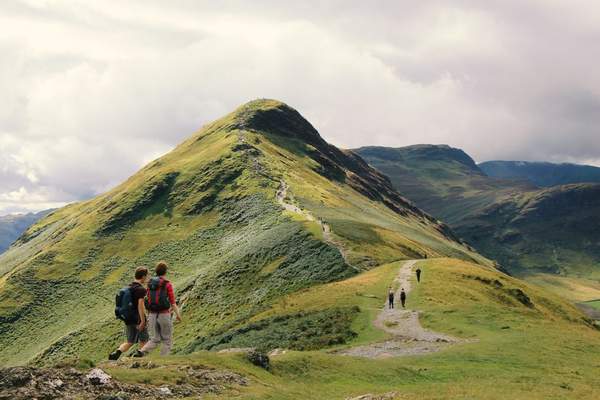
Catbells overlooks Derwentwater and rewards walkers with memorable views. It is relatively short compared with major mountain outings, but it is not a gentle stroll: parts of the ascent are steep and rocky, with sections where using your hands may help. In heavy rain or strong winds, consider a lower route. Confirm your starting point, descent and return transport before setting off.
Derwentwater and Tarn Hows: gentler options
A Derwentwater shore walk offers scenery without another exposed summit. Tarn Hows, near Coniston, is another popular lower-level choice, better suited to a stay in the central or southern Lakes. Both make good second-day options when your legs are tired, although you should still check path and weather conditions.
Loughrigg Fell and the higher mountains
Loughrigg Fell, near Ambleside and Grasmere, has varied approaches, some steep ground and far-reaching views. More experienced walkers may prefer longer mountain walks in the Lake District. However, Helvellyn and Scafell Pike require careful route choices, navigation skills and suitable weather. Fame alone is never a good reason to choose a summit.
A realistic two-day itinerary based in Keswick
Friday evening: arrive, check the mountain forecast, buy trail food and save your planned route for offline use. Identify a lower-level alternative before going to bed so a poor forecast does not derail your trip.
Saturday: allow the morning and early afternoon for a planned Catbells circuit, including breaks, photographs and a cautious descent. Afterwards, enjoy lunch and an unhurried afternoon around Derwentwater or Keswick. Avoid squeezing in another summit merely to fill the day.
Sunday: choose a shorter Derwentwater walk or a suitable Latrigg route, according to conditions and energy levels. Leave time to change, eat and travel home. For a hiking weekend in Cumbria based around Ambleside, try Loughrigg on the longer day and a route by Rydal Water on the easier one.
Let the mountain forecast guide your plans
A sunny outlook for Keswick does not guarantee comfortable conditions on a ridge. The Met Office publishes a specialist Lake District mountain forecast covering summit winds, visibility and hazards. Check it the evening before a hike and again on the morning, alongside the National Park’s walking-safety guidance.
Strong winds, thunderstorms, persistent rain or poor visibility are reasons to reconsider exposed routes. Wet rock can become slippery, and streams may be dangerous after rainfall. Carry warm layers even during summer, when conditions high on the fells can feel very different from the valleys.
In winter, ice and snow can demand specialist equipment and skills. If the conditions exceed your group’s experience, turn back or select an easier alternative. A successful weekend is one everyone returns from safely.
What to pack for two days of walking
Take well-fitting footwear with reliable grip, a waterproof jacket and trousers, insulating layers, drinking water, lunch and extra snacks. Your daypack should also contain a paper map and compass you can use, a charged phone with an offline map, headtorch, basic first aid supplies and an emergency shelter or survival bag.
Use a hiking weekend packing checklist to check your equipment before departure. Tell someone your route and expected return time. In an emergency on the mountains, call 999 or 112 and ask for the police, then mountain rescue. Do not assume mobile signal will be available everywhere.
Plan transport and a sensible finishing time
Popular trailhead car parks can fill early, particularly during holidays. Check parking arrangements and any bus or boat connections in advance; services and timetables can change by season. Travellers arriving by train should plan the onward journey to their accommodation.
Allow extra time for slower descents and unexpected stops. Keep a hillwalking route grading guide handy when different websites describe difficulty differently, and review a mountain safety checklist before tackling higher ground. Set a turnaround time rather than walking until the daylight runs out.
Frequently asked questions
Is two days enough for hiking in the Lake District?
Yes. Two active days allow one substantial hike and one shorter scenic walk. Limiting travel between valleys helps you make the most of the weekend.
Where should first-time visitors stay?
Keswick suits Derwentwater and northern fell routes. Ambleside and Grasmere work well for central walks. Choose whichever is closest to the hikes you have planned.
Can I enjoy a walking weekend without a car?
Yes, for some itineraries. Trains and connecting buses can get you to suitable bases, while local services reach certain trailheads. Always check current timetables and the final return connection.
What if the forecast is bad all weekend?
Switch from exposed hills to suitable lower-level walks, villages or indoor activities. Avoid flooded paths and dangerous winds even at lakeside level, and be prepared to change plans entirely.
Give yourself room to enjoy the Lakes
The best Lake District hiking weekend is not necessarily the one with the most summits. Stay near your planned routes, choose one main challenge, keep a flexible backup and leave space for a lakeside coffee or an unexpected viewpoint. That is often what makes two days feel like a proper escape.