
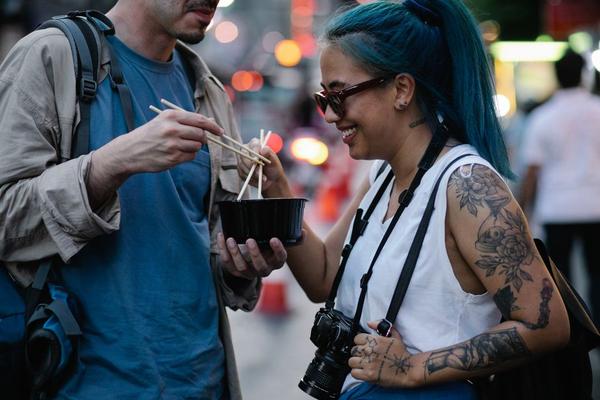
Travelling alone does not have to mean spending every meal and evening by yourself. The easiest way to meet people is to put yourself in places where conversation already has a reason to happen. A shared activity, communal table or walking tour removes much of the awkwardness because you already have something to talk about.
The goal is not to become the most outgoing person in the room. It is to create enough small opportunities for connection that a few naturally turn into longer conversations, shared plans or friendships.
Choose places where conversation is already normal
Your accommodation can shape how social a solo trip feels. Hostels are an obvious option, but you do not need a crowded dorm. Many offer private rooms alongside shared kitchens, lounges or organised events. Guesthouses and small hotels with communal breakfasts can work too.
If you want to meet people, spend some time in shared spaces rather than automatically retreating to your room. Sitting at a communal table with a coffee can make you approachable without forcing interaction. Cafes with shared tables, food halls and coworking spaces can serve the same purpose.
Use activities as a shortcut to easier conversation
Structured activities are one of the best options for socialising while travelling alone because nobody needs to invent a reason to start talking. Walking tours, cooking classes, language exchanges, surf lessons, hiking groups and photography walks all give you an immediate shared subject.
Arrive a little early. The ten minutes before an activity begins are often socially useful. A simple question such as “Have you done one of these tours before?” or “How long are you here for?” can open a conversation without sounding rehearsed.
Afterwards, keep invitations small. If you get along with someone, saying “I’m grabbing lunch nearby if you want to join” feels easier than trying to turn a short chat into a full-day plan.
Let repeated contact do some of the work
Making friends during solo travel becomes easier when you see the same people more than once. Familiarity lowers the pressure, which is why multi-day classes, recurring language exchanges and staying several nights in one place can work well.
You can create the same effect yourself. Return to the same cafe, use the same coworking space or join two activities run by the same hostel. Conversation often feels more relaxed the second time you meet.
Start with practical questions, not clever opening lines
You do not need a perfect conversation starter. Practical travel questions are relevant and easy to answer. Ask whether someone found a good place to eat, which neighbourhood they liked or where they are heading next.
Then listen for something you genuinely want to know more about. Good conversations usually grow from curiosity rather than performance. If the other person gives short answers or turns back to what they were doing, let the exchange end gracefully. Not every interaction needs to become a friendship.
Say yes selectively and keep your boundaries
Meeting travellers can lead to spontaneous invitations for dinner, a day trip, a bar or the next city. You do not need to accept everything to be sociable. Join plans that are public, easy to leave and comfortable for you.
Being friendly also does not require sharing your room number, exact accommodation, financial information or full itinerary with someone you have just met. Keep first meetups in public places, arrange your own transport where practical and trust discomfort even when you cannot immediately explain it.
Official solo-travel safety guidance commonly advises asking accommodation staff or local guides about local risks, staying cautious around strangers who are unusually pushy or over-friendly, and avoiding situations where someone is trying to isolate you. Social confidence should never override your judgement.
A practical example of a low-pressure social evening
Imagine you arrive alone in Lisbon in the afternoon and book a small-group walking tour for early evening. You arrive fifteen minutes early and ask another solo traveller whether they have been in the city long. During the tour, you chat again and discover that two other people are travelling alone too.
You were already planning to visit a nearby food market afterwards, so instead of making a big invitation, you simply say, “I’m heading there after this if anyone wants to come.” Two people join you. Even if the evening ends there, you have had company without forcing anything. If you get on well, you can swap contact details or make a plan for the next day.
This is often what meeting people while travelling alone looks like in practice: not dramatic networking, but small, low-pressure openings.
Make yourself easier to approach
Sometimes people want company while accidentally signalling the opposite. Headphones, constant phone use and sitting in the most isolated corner make conversation less likely. In a social setting, put your phone away for a while, look around and leave some space for interaction.
A quick smile, eye contact or casual comment about what is happening around you can be enough. You do not need to perform extroversion. You only need to look open to a brief exchange.
Use online communities as a bridge
Local event platforms, hostel group chats, language-exchange communities and destination-based travel groups can help you find activities before or after you arrive. Use them to identify public events and shared-interest meetups rather than relying only on private one-to-one invitations from strangers.
Events with a clear organiser, public venue and recent activity are easier to assess and give you a natural exit if the atmosphere does not feel right.
FAQ
Is it normal to feel awkward trying to meet people while travelling alone?
Yes. Even confident travellers can feel awkward initiating conversation in a new place. Choose situations where interaction has a built-in purpose, such as a tour, class, shared meal or group activity.
Are hostels the best way to meet other travellers?
They can be effective, but they are not the only option. Walking tours, language exchanges, coworking spaces, classes and small-group excursions can be just as social, especially if hostel life is not your style.
How can I meet people without giving up my independence?
Keep plans flexible and make small invitations. Join someone for coffee, dinner or one activity rather than automatically rearranging your itinerary. You can enjoy company while keeping your own accommodation, transport and priorities.
What if I meet people but do not make lasting friends?
That does not mean the trip has gone badly. Some connections last ten minutes, some last an evening and a few become long-term friendships. Aim for enjoyable interactions rather than judging every conversation by whether it becomes permanent.
Enjoy connection without making it a requirement
The best social solo trips leave room for both company and solitude. Put yourself in places where meeting people can happen, start simple conversations, accept invitations that feel right and keep your boundaries clear.
Once you stop treating every interaction as a test of confidence, meeting people feels more natural. You are not trying to impress strangers or collect travel friends. You are simply giving chance a few more opportunities to work.